
A Bit of History Before The Intriguing Facts
For the first time in almost a millennium, the Bayeux Tapestry will return to Britain, in a rare and historic loan from France, to be displayed at the British Museum from September 2026 to July 2027.
It marks two major anniversaries:
960 years since the Battle of Hastings (1066–2026)
1,000 years since the birth of William the Conqueror (c.1027–2027)
Benchwood House sits less than nine miles from Battle Abbey, placing you within the very countryside where the story unfolded.
Staying with us offers a rare opportunity to immerse yourself in the world of 1066, whether you plan to see the tapestry in London or simply wish to explore the historic landscape that inspired it.
Stretching 70 metres, the 11th‑century Bayeux Tapestry tells the story of the 1066 Norman Conquest, William of Normandy’s victory over England’s last Anglo‑Saxon king, Harold Godwinson, blending vivid storytelling with themes of loyalty, ambition, and broken promises.
The announcement of its return has already captured international attention.
Visitors will have the chance to stand before a masterpiece that has survived nearly a thousand years, 70 metres of exquisite 11th‑century embroidery, alive with scenes of ambition, loyalty, conflict, and the turning of England’s fate.
Every stitch carries a story; every panel reveals a world of symbolism, power, and human drama.
To accompany this extraordinary moment, we’ve gathered 10 intriguing facts about the Bayeux Tapestry and the Battle of Hastings, insights that deepen the story behind the exhibition and enrich the experience of exploring the landscape where these events unfolded.
If you hope to see the tapestry during its limited exhibition, we recommend signing up for the British Museum’s newsletter here, where you’ll be notified when the first release of tickets becomes available on 1 July 2026.
We invite you to wander through the stories below.
10 Facts From The Bayeux Tapestry
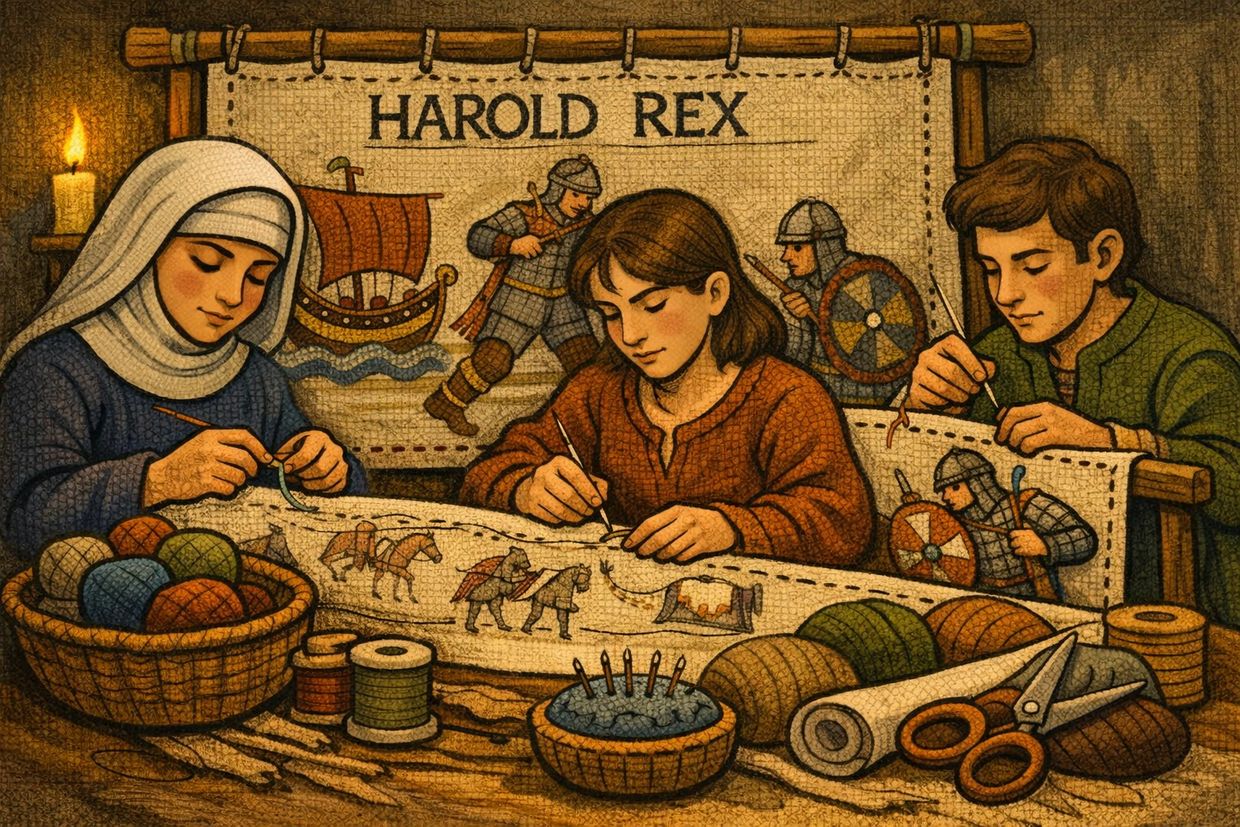
The Bayeux Tapestry is Not Tapestry
The Bayeux “Tapestry” is technically not a tapestry at all. Tapestries are woven; the Bayeux piece is embroidered linen, stitched using wool yarn in stem stitch and laid work. Its name is an historical misnomer.
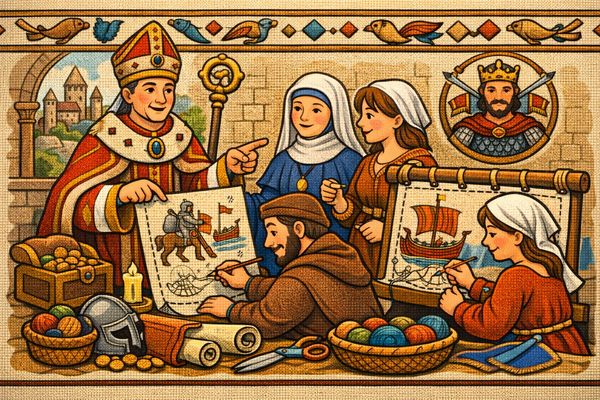
The Bayeux Tapestry Was Commissioned By the Half-Brother of William the Conqueror
The work was commissioned by Odo, Bishop of Bayeux and half‑brother to William the Conqueror.
Odo was also Earl of Kent, and evidence suggests the embroidery was produced in Kent, possibly by the skilled needle workers of Barking Abbey.

No Arrow in the Eye?
The famous scene showing King Harold Godwinson struck by an arrow in the eye is almost certainly symbolic. Contemporary accounts suggest Harold was cut down in close combat, likely hacked to death by Norman knights.
The arrow motif may have been added or emphasised later.
Historians believe the famous "arrow in the eye" story is a myth; King Harold Godwinson was more likely cut down and hacked to death.
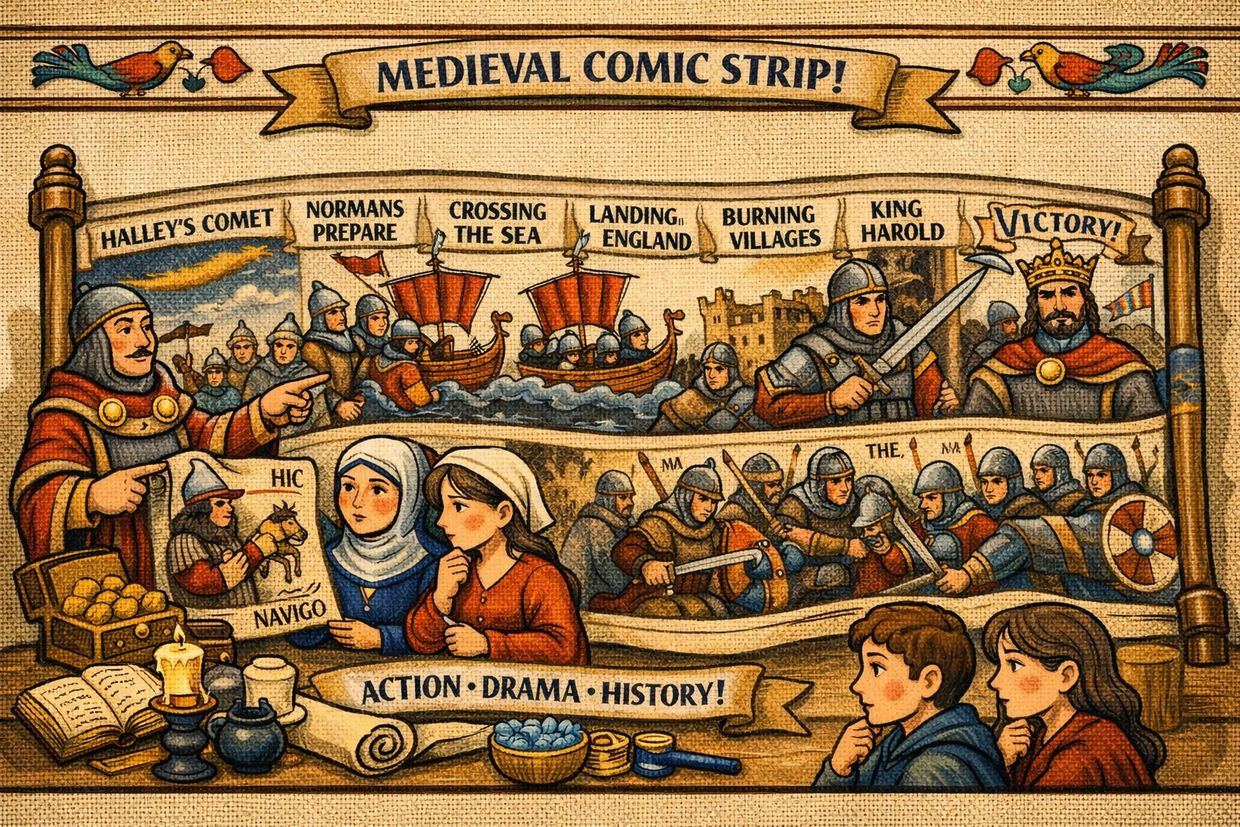
The Bayeux Tapestry is a "Medieval Comic Strip"
At nearly 70 metres long, the Bayeux Tapestry functions like an 11th‑century comic strip, narrating the events leading to the Norman Conquest with sequential scenes, captions, and expressive imagery.
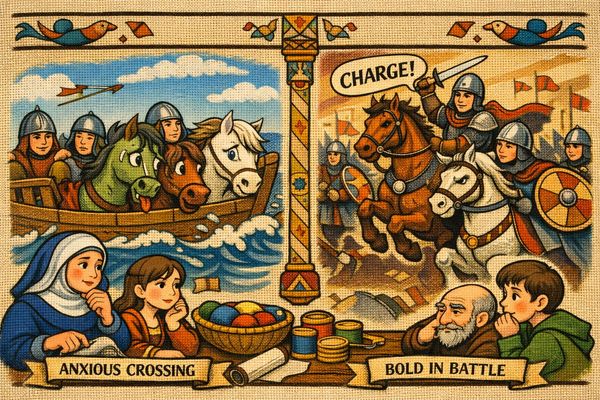
The Horses Have Personality
The embroidery gives remarkable attention to the horses, which display emotion and movement, from grimacing during the Channel crossing to spirited energy in battle.
Their expressions add drama and personality to the narrative.
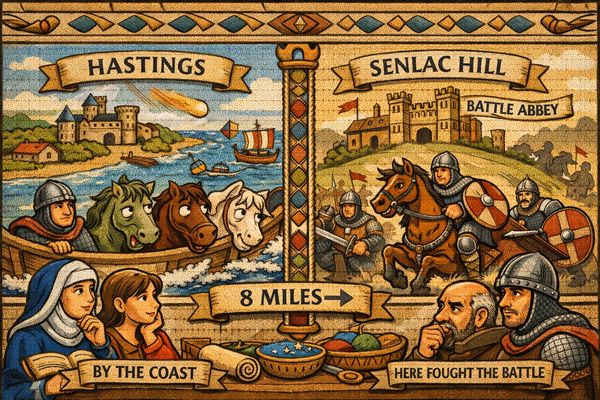
The Battle of Hastings Is Not Where the Battle Was
Although known as the Battle of Hastings, the fighting took place 8 miles inland at Senlac Hill, the site where Battle Abbey now stands.
Hastings was the nearest major settlement, giving the battle its enduring name.
Did King Harold II Arrive By Land or Sea?
New research by Professor Tom Licence (University of East Anglia) re‑examining the Anglo‑Saxon Chronicle suggests Harold’s return from defeating the Norwegians at Stamford Bridge may not have been an exhausting overland march.
Instead, he may have travelled partly by sea, significantly shortening the journey.
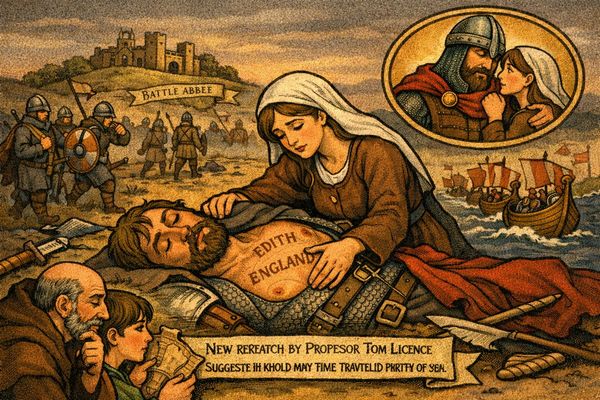
A Tattooed King
King Harold II is said to have had the words "Edith" and "England" tattooed on his chest.
Edith Swanneck (also known as Edith the Fair or Edgiva) was the wealthy common-law wife of King Harold Godwinson, having had at least five children with him.
Following Harold's death at the Battle of Hastings in 1066, she is said to have identified his mutilated body by his tattoos over his heart, which reportedly represented the two most crucial aspects of his life, his love and his country.
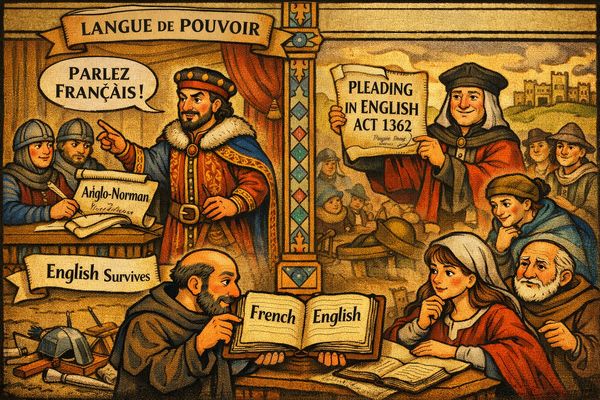
French Replaced as the Elite Language
After 1066, Anglo‑Norman French became the language of the ruling elite, law courts, and administration for nearly three centuries.
English survived among commoners, and the blending of the two profoundly shaped the vocabulary of modern English.
The Pleading in English Act (1362) finally restored English to official legal use.
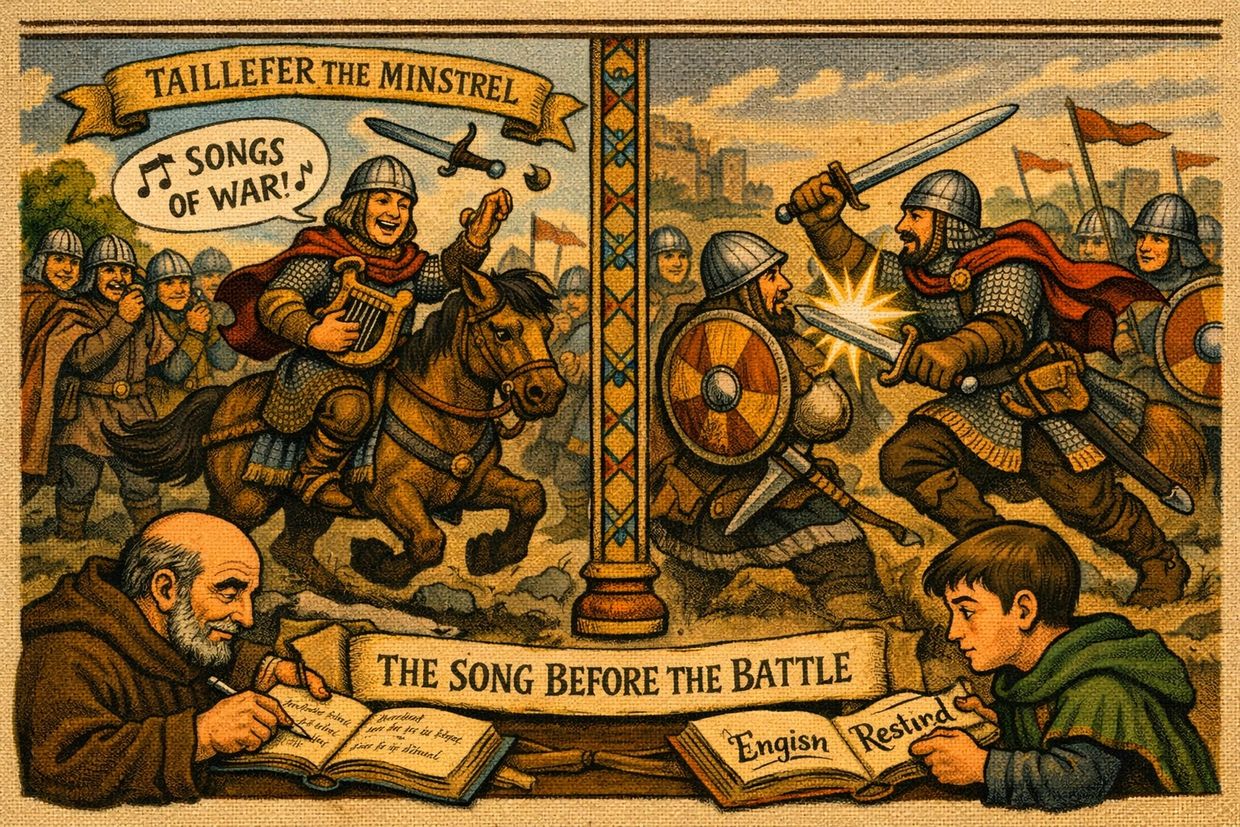
A Minstrel Struck the First Blow of the Battle
Ivo Taillefer, William’s minstrel (a singer or musician) killed the first Saxon of the battle.
The Carmen de Hastingae Proelio ('Song of the Battle of Hastings’) says that a Saxon soldier broke ranks, and Taillefer killed him.
Later sources say that Taillefer charged into the enemy shield-wall, where he killed several Saxons before he was overwhelmed.